

 English
  Tiếng Việt
 Nowadays, Li-Fi technologytransmitting wifi using led lights, with frequency bands from 2.4GHz to 5GHz, some specially designed devices can transmit at higher frequencies, is not new to us. It is predicted that by 2019, there will be about 10 billion connected devices transmitting data, and the demand for information exchange per month will reach 35 billion billion bytes, a truly enormous figure. If this situation continues, Wifi signals will not be able to meet such a large demand, leading to electromagnetic network congestion.

This problem has been and is happening in major cities with very high internet access density. Therefore, the best scientists have gathered, researched, and successfully developed the technology of transmitting WiFi using the variable light of LED bulbs, also known as Li-Fi technology. This technology will open a new era for the development of wireless communication networks for all mankind.
The formation of Li-Fi technology
As a pioneer in wireless communication, Professor Harald Haas has always had a vision for the future. In 2011, the professor gave the first presentation on Li-Fi (Light Fidelity) technology, marking the official birth of this technology and ushering in a new chapter in the development of Wifi transmission technology. With Li-Fi, you can use LED lights to transmit data, and even use car headlights to do so. Li-Fi technology is truly very potential and we cannot fully exploit this technology yet. It is the solution to all the troubles in the context of theinternet of thingsrapid development to build intelligent systems in practice.
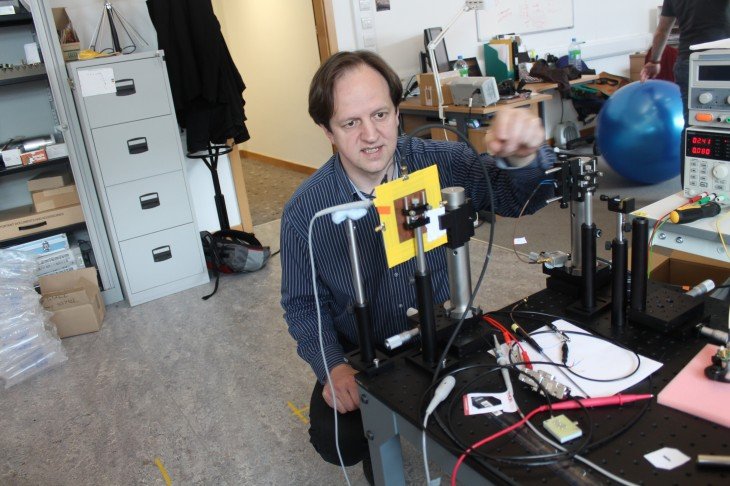
The representative of PureLi-Fi, a company specializing in Li-Fi technology, with Professor Harald Haas as the head of research, stated:
"PureLi-Fi will be the company that pioneers in solving the alarming issues of future data exchange. Li-Fi is the most optimal solution. Light from bulbs has become too familiar, it is linked to infrastructure and appears everywhere, tightly integrated with data sources..."
PureLi-Fi was founded in 2012, formerly PureVLC, spun off from the University of Edinburgh. However, many researchers, led by Professor Harald Haas, began researching Li-Fi technology in 2008. Finally, the first commercial product was launched in 2013 and applied to a healthcare service provider in the US.
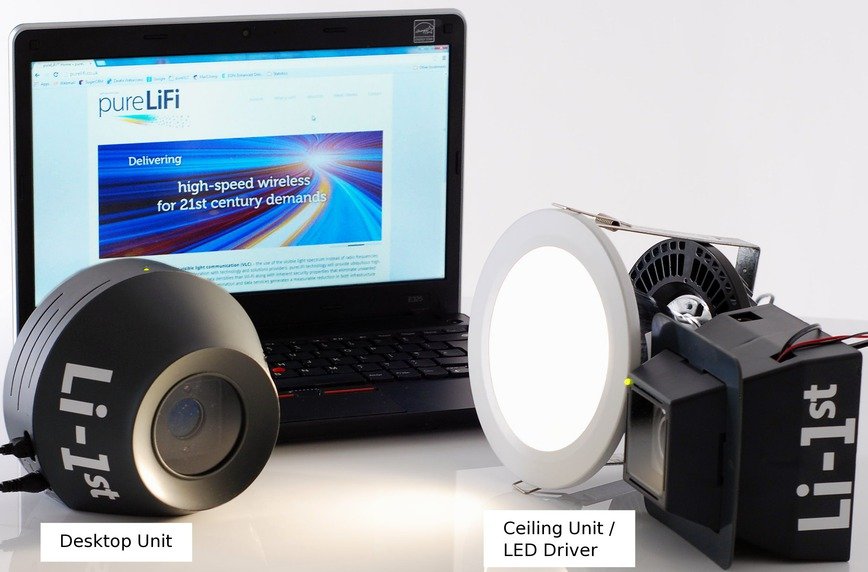 Some products applying Li-Fi technology
>>> See 3g wifi routerwith WPA2-AES security that cannot be hacked
Technical details of Li-Fi technology.
Li-Fi is a 5th generation technology that uses variable light for communication. It uses LED light to transmit high-speed networked data. It has high mobility and fast connection speeds like Wifi. Thanks to high convergence, LED light easily creates dedicated uplink and downlink channels.
The operating principle of Li-Fi technology can be understood simply as follows. LED bulbs emit light with different brightness intensities, this variation occurs very rapidly at the nanosecond level, imperceptible to the human eye. The system analyzes the received signals and converts them into data in the form of 0-1 bits.
The biggest limitation of this technology is that it cannot penetrate obstacles, so its coverage area will not be as wide as Wifi signals. On the other hand, precisely because of this, if Li-Fi is used, our system will be extremely secure against hackers because Li-Fi signals cannot leak out.
Li-Fi also has a great advantage, which is that it can be used in sensitive environments such as airplanes, hospitals, or nuclear power plants because it does not cause magnetic interference like Wifi signals.
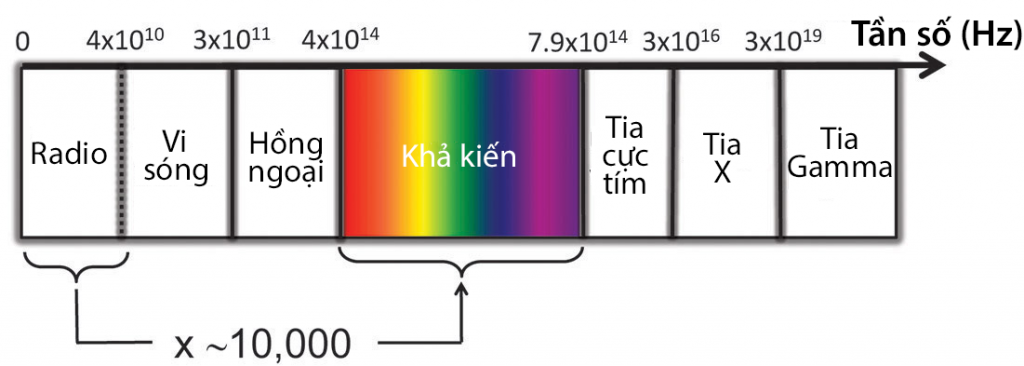
Both Wifi and Li-Fi transmit data via the electromagnetic spectrum, but Wifi uses a specific frequency band on radio waves. Li-Fi uses visible light, which makes Li-Fi's information transmission capacity almost infinite because the visible frequency spectrum is more than 10,000 times larger than Wifi's frequency spectrum.
Most recently, researchers have achieved Li-Fi data exchange speeds of up to 10Gbps, equivalent to 1.25GB/S, which is much faster than current Wifi technology. Wifi is also cheaper because no one charges for light, however, installation costs will be higher due to the more advanced technology.
>>> SeeDepending on your needs and the nature of your work, you should choose the most suitable device. If you need a high-speed device to keep up with the times, 4G is the number 1 choice. But if you need a temporary device to replace internet outages, a 3G USB is sufficient. Of course, you also need to consider your budget, as the price of a "4G Dcom" is not low; it is twice or thrice the price of a 3G Dcom.Wifi hotspots with speeds of 300MB/S, you should check them out
This technology is only feasible when using LED bulbs because with other common types of lights such as incandescent, fluorescent lamps, they cannot be turned on/off or have their intensity changed at the nanosecond level. At the same time, LED bulbs have a much longer lifespan and consume less electricity.
The potential of Li-Fi technology, can it replace Wifi?
Based on the analysis above, we can conclude that Wifi technology will still be widely used because Wifi waves have good penetration capabilities through objects. Wifi technology has also made remarkable progress in recent times, so perhaps Wifi will become even more popular in large-scale networks. But that doesn't mean Li-Fi technology has no room for development.
Li-Fi technology will develop in a completely different direction; it will be applied in small-scale environments and areas sensitive to electromagnetic waves. Moreover, it can help cars, motorcycles, vehicles, machines... communicate with each other using light.
Although there are still many limitations and challenges ahead. But one thing is certain: Li-Fi will develop significantly in the future. Let's wait and see how this technology is applied in life.